HarborFlare Insect Defense delivers residential pest control services in Nashville to secure foundations, crawl spaces, and living areas against destructive regional infestations. Property owners seeking dependable pest control near me receive calibrated perimeter treatments engineered for local pest pressures.

Pest control services in Nashville is a specialized residential and commercial management discipline that eliminates active infestations and installs protective chemical and physical barriers against native Middle Tennessee insect and rodent species.
Every service reflects the same meticulous attention to detail, whether it's a single job or a larger pest control services project across Nashville.
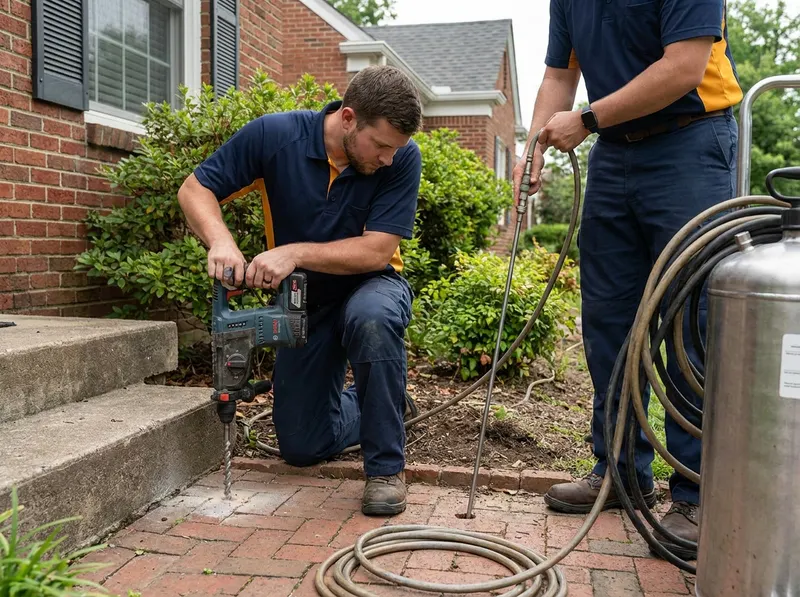
Subterranean termite defense uses non-repellent liquid soil termiticides and monitoring stations placed at 10-foot intervals around exterior foundation perimeters. Application targets native reticulitermes colonies nesting within damp Middle Tennessee soil before workers compromise crawl space sills or support framing. Technicians trench foundation soil to depth, treating backfill to establish an uninterrupted chemical defense shield. According to the EPA safe pest control guidelines , non-repellent liquid formulations remain undetectable to tunneling worker termites, allowing the active ingredient to transfer systematically throughout the underground colony. Crawl space piers receive targeted rod injections down to limestone footings, sealing blind entry points behind masonry veneer. We install tamper-resistant external monitoring stations that detect underground foraging activity before reproductive swarmers reach structural lumber during the humid spring months.
Get a quote →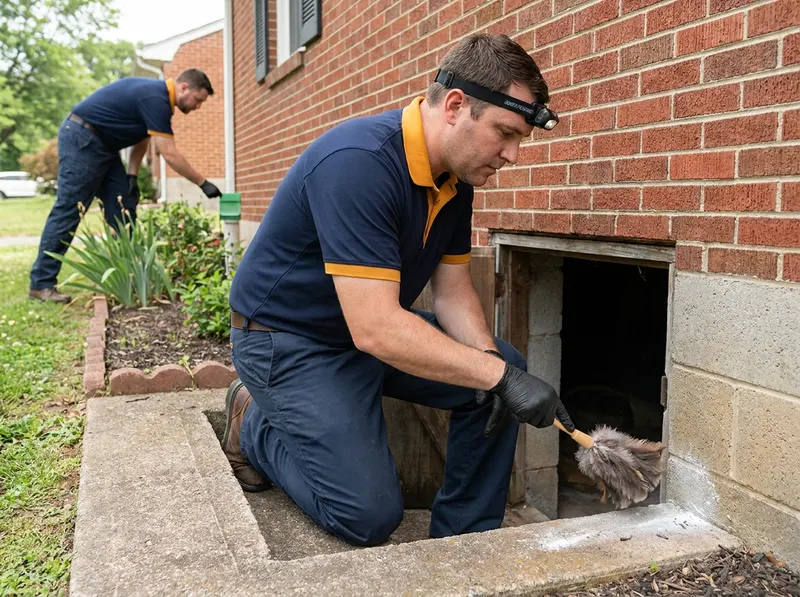
Brown recluse mitigation relies on micro-crystallized dust applications inside structural voids, electrical drop plates, attic framing, and basement subfloors. Specialized insect growth regulators and slow-release contact residuals target dry indoor harborage points where loxosceles reclusa nests. Physical monitoring panels quantify population thresholds in low-traffic storage zones to verify eradication. Structural inspections adhere to research established by the Journal of Integrated Pest Management , isolating dry wall cavities, floor joist junctures, and cellulose insulation pockets where mature recluses reproduce without disturbance. We deploy desiccant dust formulations that breach the waxy exoskeleton of arachnids, drying out clusters hidden deep within baseboard framing where common retail surface sprays cannot penetrate.
Get a quote →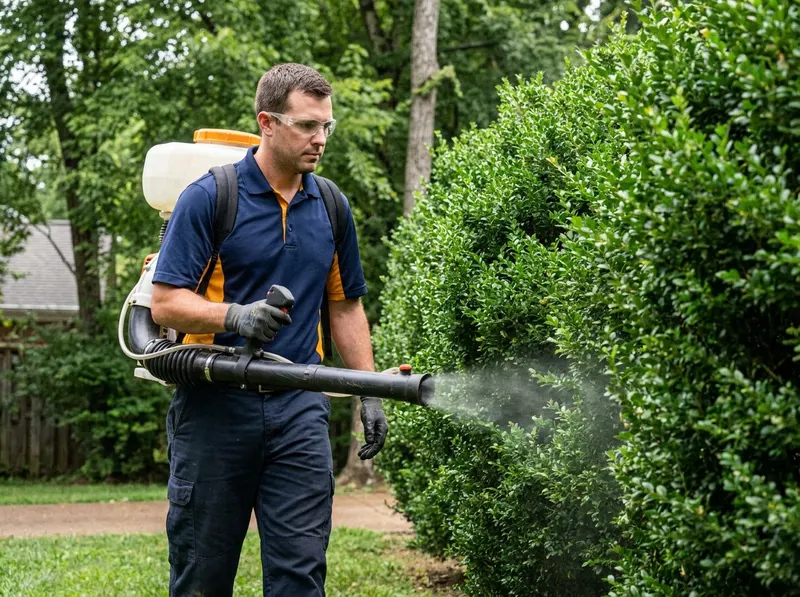
Exterior mosquito treatments target broadleaf shrubs, damp perimeter tree canopies, and shaded groundcovers where Asian tiger mosquitoes harbor. Backpack misters apply residual adulticides to lower foliage surfaces, paired with bacterial Bacillus thuringiensis israelensis dunks placed in standing storm water basins. Treatment cycles recur on 21-to-30-day schedules through summer humidity peaks. Applications follow biological standards outlined by the Centers for Disease Control and Prevention mosquito control protocols , minimizing drift while neutralizing resting adult populations beneath leafy windbreaks. Technicians inspect roof gutters, French drains, and shaded foundation swales to eliminate cryptic aquatic oviposition zones, protecting residential patios and recreational yards throughout active outdoor seasons.
Get a quote →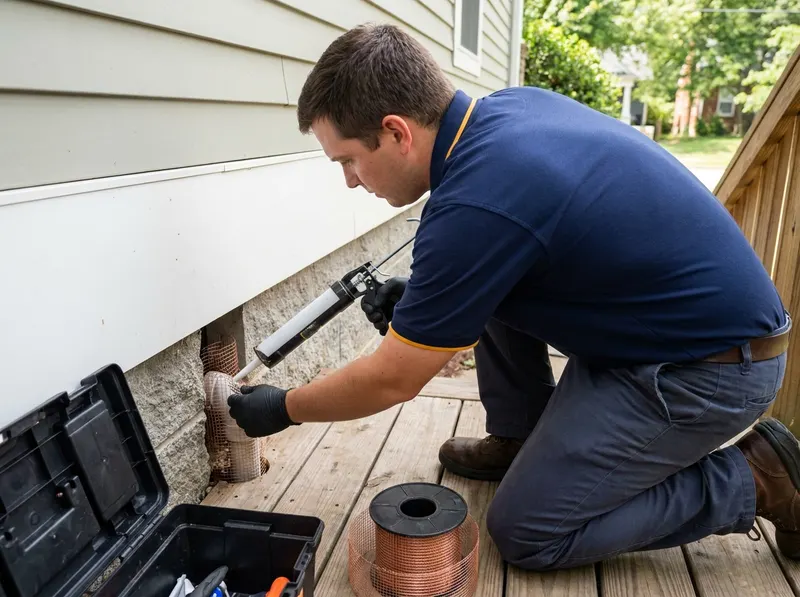
Rodent suppression establishes physical barriers against Norway rats, roof rats, and house mice attempting autumn entry through foundation gaps. Galvanized steel mesh and structural sealants close exterior openings exceeding one-quarter inch along crawl space vents, roof eaves, and plumbing entryways. Interior tamper-resistant mechanical bait stations eliminate trapped interior populations without secondary exposure hazards. Technicians reference rodent management standards detailed by the Occupational Safety and Health Administration to safely handle attic crawlways and contaminated insulation spaces. Our exclusion team seals exterior utility penetrations using corrosion-proof hardware cloth and polyurea sealants, stopping winter rodent incursions before nesting pests can chew through wiring assemblies or HVAC duct sleeves.
Get a quote →
Intensive cockroach control isolates kitchen cabinetry, utility chases, and warm motor housings using precision insect growth regulator baits and targeted vacuum extraction. Technicians apply non-repellent contact concentrates directly into tight wall seams, preventing reproductive nymphs from dispersing to adjacent residential rooms. Follow-up visits check bait consumption patterns to disrupt biological egg-hatch cycles. Sanitization standards conform to technical reports from the National Cooperative Extension System , eliminating alternative grease and moisture sources so pest populations feed directly on matrix baits. Our cleanout series targets micro-cracks along backsplashes, dishwasher plumbing conduits, and refrigerator heat coils to collapse entrenched populations within 14 to 28 days.
Get a quote →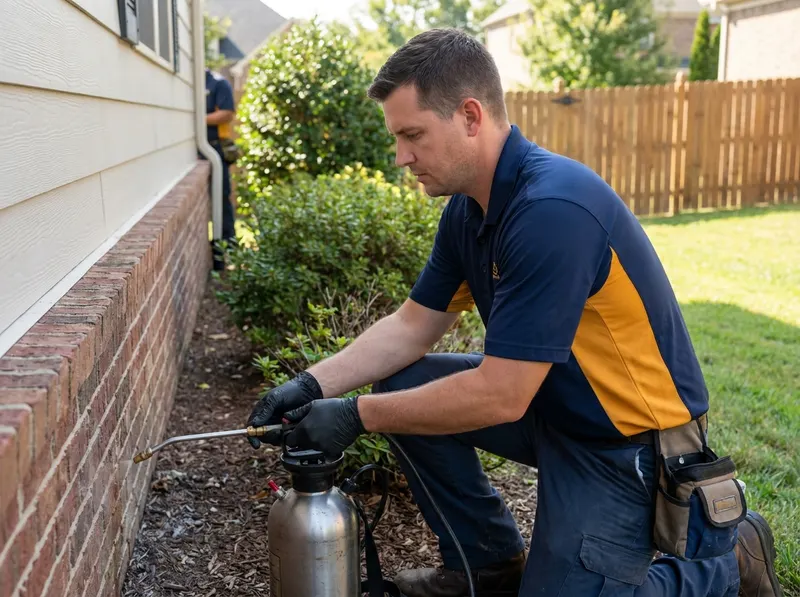
The exterior crawling insect shield applies a continuous 3-foot upward and 3-foot outward residual perimeter band around residential foundation walls. This barrier repels American cockroaches, centipedes, field crickets, and pavement ants before they cross exterior thresholds. Granular water-activated barriers layered across adjacent mulch beds prevent landscape pests from migrating into masonry brick weep holes. Treatment methodologies follow structural guidance from the National Pest Management Association , balancing exterior soil chemistry with long-lasting repellent barriers. Routine quarterly sweeps clear spider webs, inspect weep line vents, and treat threshold flashing around entry doorways to prevent seasonal perimeter breaches across fluctuating summer and autumn weather.
Get a quote →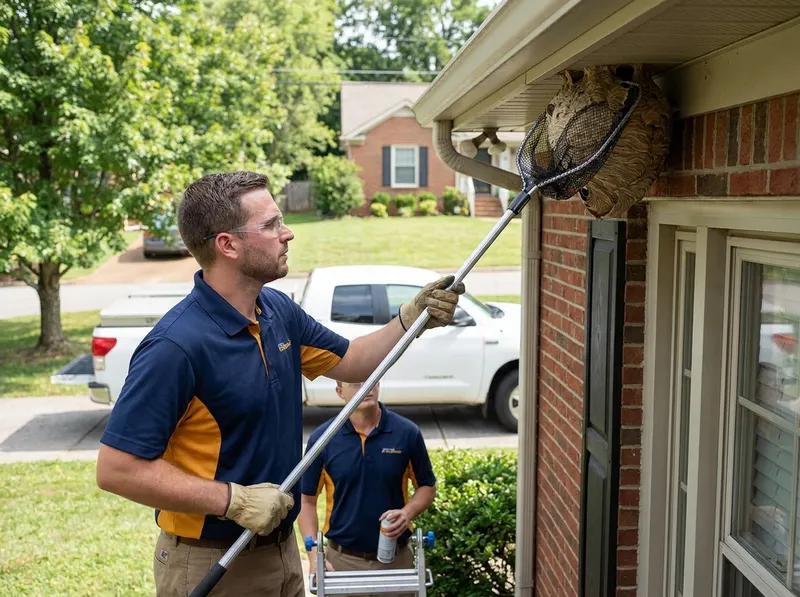
Stinging insect management neutralizes aerial paper wasp nests, bald-faced hornet structures, and ground-nesting yellow jacket colonies around eaves and outdoor play zones. Technicians employ specialized directional aerosol freezes and residual dust injections directly into structural voids to collapse the nest structure safely. Complete mechanical removal of exposed comb assemblies prevents secondary carpet beetle infestations. In accordance with safety parameters from the Department of Agriculture research publications , void-dwelling nests receive low-pressure non-repellent dusting to neutralize aggressive worker broods without forcing defensive swarms out into adjacent living spaces. Technicians seal historical nest entry points along soffit returns and fascia boards to prevent queen re-establishment in subsequent springs.
Get a quote →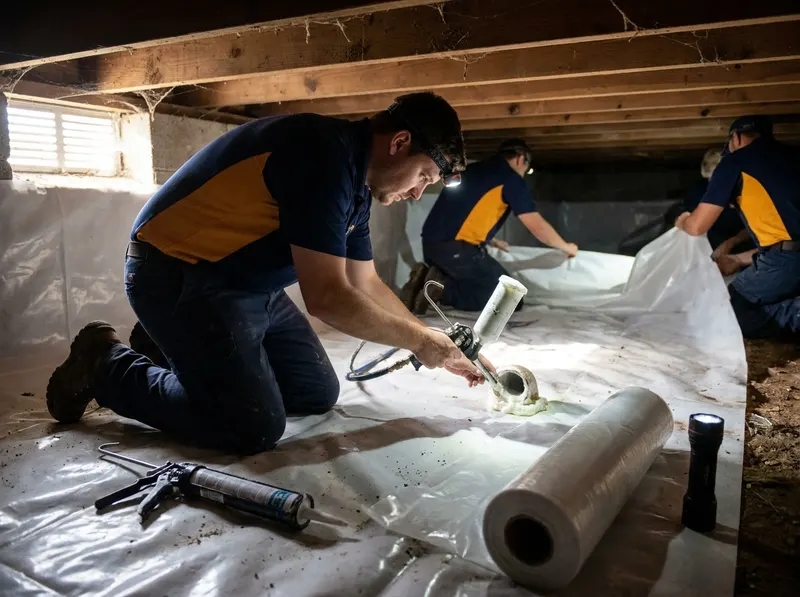
Sub-floor pest defense combines thick puncture-resistant polyethylene vapor barriers with targeted borate wood treatments applied to floor joists. Lowering foundation humidity below 15 percent halts wood-decay fungi growth and starves moisture-dependent wood borers, silverfish, and camel crickets. Foundation perimeter vents receive custom galvanized pest screens to stop recurring rodent burrowing. Environmental guidelines set by the U.S. Department of Housing and Urban Development highlight sub-floor moisture control as a key deterrent against wood-destroying insect colonizations. Technicians clean existing biological debris, treat sub-floor joists with systemic disodium octaborate tetrahydrate, and mechanically fasten reinforced crawl space sheeting directly to perimeter walls to isolate the structure from moist soil reserves.
Get a quote →You get a firm, itemized quote for your pest control services before any work begins, no surprises, no pressure.
Careful prep, tidy work, and a full cleanup when we are done. We treat your home and belongings like our own.
The same trusted, background-checked team from the first call to the final check.
If structural wooden joists show active mud tubes or hollowed grain, select subterranean termite barrier remediation; if living quarters show localized indoor spider web clusters or crawling nocturnal pests, select targeted indoor micro-injection and crevice treatments. If exterior lawns and outdoor living patios show heavy mosquito activity between May and September, select dedicated seasonal foliage misting and larvicide defense. The trade-off centers on treatment placement and chemical mobility: localized interior spot work addresses immediate active pests inside living spaces but leaves exterior foundation margins open, whereas complete outdoor perimeter barrier treatments block broad outdoor insect colonies before entry but require dry outdoor conditions during application.
Properties situated over wet crawl spaces require both physical vapor encapsulation and perimeter applications to maintain stable year-round protection. For wood-boring beetle or termite damage, liquid trenching provides 5 to 10 years of residual deterrence in the soil, whereas surface sprays degrade under direct UV radiation within 60 to 90 days. Choosing spot insect traps indoors saves immediate expense but fails to disrupt breeding cycles nested behind insulated drywall or beneath subflooring.
Integrating mechanical barrier sealing with botanical or micro-encapsulated liquid bands costs more initially, yet cuts secondary interior call-backs by over 80 percent across multi-season cycles.
Every project gets a firm, written price after a free on-site visit. Ranges below for orientation.
Tell us about your pest control services job and we'll send a clear, written quote, usually the same day. Or just call and talk to a real Nashville pro.
(615) 537-0362
Properties near Shelby Bottoms Greenway and Percy Priest Lake face persistent pest surges driven by high humidity and dense river vegetation. Older brick bungalows in Belmont-Hillsboro and East Nashville feature porous stone foundations and crawl spaces vulnerable to subterranean termite mud tubes and overwintering rodents. Karst limestone geology across Davidson County creates underground moisture pockets that sustain active brown recluse spider populations throughout dry summer months. High ambient humidity generated along the Cumberland River valley prevents soil from drying rapidly, allowing subterranean termite colonies to forage closer to foundation stem walls through late autumn. In historic areas like Germantown and Sylvan Park, older floor plans with untreated subflooring frequently encounter camel cricket infestations in damp basements. The transition from wooded cedar glades in Donelson to dense suburban neighborhoods in Green Hills creates ecological corridors where roof rats, lone star ticks, and subterranean insects travel directly from green spaces into private residential attics and landscaping beds. Addressing these specific conditions demands deep trenching along exterior limestone foundations, targeted crawl space vent hardware, and customized soil barriers tailored to Davidson County clay compositions.
Free estimates for Nashville & the surrounding area.
For standards, safe disposal, and service guidance on pest control services in Nashville, TN, useful references include U.S. EPA, ENERGY STAR, U.S. Dept. of Energy, Consumer.gov, U.S. Census Bureau, and Google Maps. General consumer and small-business resources are available from USA.gov, Better Business Bureau, FTC Consumer Advice, U.S. Small Business Administration, and Ready.gov.
 HarborFlare Insect Defense